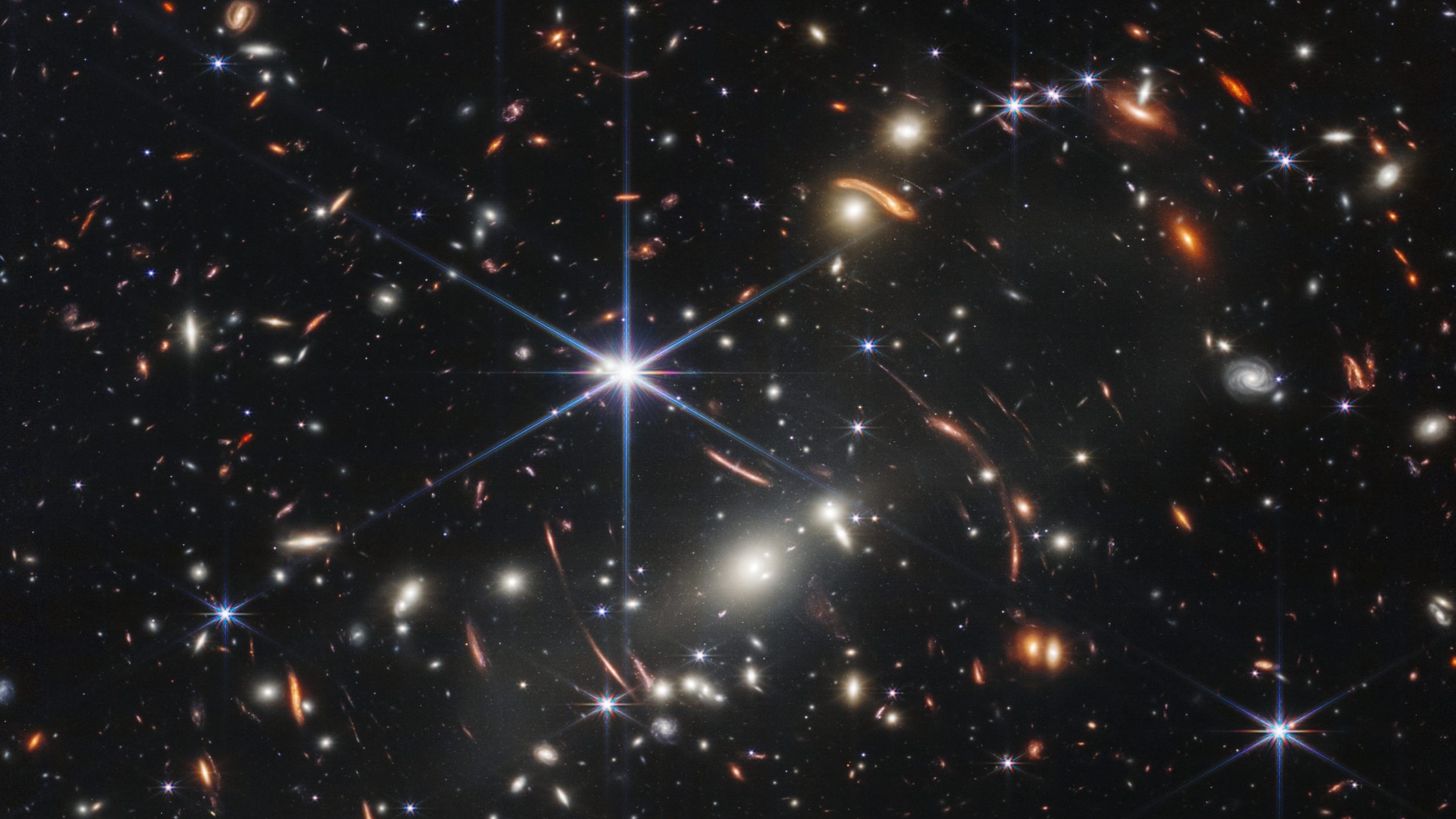
Take a deep breath. It gets crazy…
note
This is all based on mediocre research, lazy maths, and large assumptions. I do not claim that my “findings” are accurate. It’s actually far from accurate technically speaking, but let’s use our imagination and have some mind-bending fun. Feel free to correct me in the comments, or even start a discussion.
Firstly, let’s make some assumptions:
Every human lives for 100 years.
Every human, from birth, is able to observe ONE planet each year. So that’s 100 planets per person.
We have the technology to observe any planet we wish (including its surface), anywhere in the observable universe.
Every galaxy in the observable universe is the same size as ours (the Milky Way galaxy) and contains the same number of planets.
Next, we need to assign some variables just to make calculations easier:
“A” = estimated amount of humans that have ever existed = 117,000,000,000 humans.
“B” = estimated amount of planets in the Milky Way galaxy = 100,000,000,000 planets.
“C” = estimated amount of galaxies in the observable universe = 100,000,000,000 galaxies.
“D” = estimated amount of years the human population, collectively, spends observing planets (this can also be translated as the number of planets observed).
“E” = estimated amount of planets in the observable universe.
“F” = estimated amount of planets remaining unobserved.
Now let’s crunch some numbers:
D = 100 years x A humans = 11,700,000,000,000 years (AKA, planets observed).
E = B planets x C galaxies = 10,000,000,000,000,000,000,000 planets in the observable universe.
F = E planets – D planets = 9,999,999,988,300,000,000,000 planets remaining unobserved.
So from the above calculations, we can see that the human population can observe only 0.000000117% of the total amount of planets that exist in the observable universe.
Now this is where it gets crazy…
How many humans will ever exist? Well, according to the Doomsday Argument, some have estimated that about 1,200,000,000,000 humans will ever exist. This includes past, present, and future humans.
So given this info, let’s assign three new variables:
“G” = estimated amount of humans that will ever exist = 1,200,000,000,000 humans.
“H” = estimated amount of planets we can observe, given “G”.
“I” = estimated amount of planets remaining unobserved, given “G” and “H”.
Now some more lazy maths and large assumptions:
H = 100 years x G humans = 120,000,000,000,000 planets observed.
I = E planets – H planets = 9,999,999,880,000,000,000,000 planets.
Soooo, taking this into account, we will only ever be able to observe 0.0000012% of all planets in the observable universe.
\/Eeemagine/\
“But I thought we were talking about aliens?”
Yes. We are now.
Earth is the only planet we are aware of that contains life. So of all planets “E”, life as we know it only forms 0.00000000000000000001% of all planets that exist in the observable universe. So it stands to reason that there should be life elsewhere.
“But why haven’t we seen life on other planets?”
Well, firstly, it’s very difficult to peer through the atmospheres of planets with our current technology.
Secondly, light from the other end of our galaxy takes roughly 100,000 years to reach us. So if we could see through the atmospheres of planets on the other end of the galaxy, we’d only be seeing what was there 100,000 years ago.
“But life existed on earth for about 3,700,000,000 years, so we should be able to see some life from the other side of the Milky Way?”
Yes, but also take into account that our closest (major) neighbouring galaxy is 2,540,000 light years away, so if life were existing on of the planets there (and nowhere else here), we’d be seeing what existed 2,540,000 years ago.
“Okay, but if we could see through THOSE atmospheres, we’d be able to see something, no?”
Also yes, but note that this is talking about our NEAREST (major) galaxy. There are galaxies that exist at the other end of the observable universe.
The observable universe is about 93,000,000,000 light years in diameter, so if we had to look straight ahead at one of the galaxies at the end of the observable universe, we would be seeing what existed 46,500,000,000 years ago (calculated using the radius of the observable universe).
The sun has only existed for 4,600,000,000 years. It’s estimated that the sun will exist for 7,000,000,000 more years. Adding that to its current age, the sun’s lifetime is about 11,600,000,000 years. So 4 suns would have been born and died before any light from the end of the observable universe reaches us. Life could only be forming on those planets as we speak, but we won’t know because we’ll only be able to see that in 4,600,00,000 years. In that time, 4 completely different sun-like star systems would form and die. When life ends here, it could be forming elsewhere.
Note: I’ve been using the term, “observable” universe. That’s all that we can see because the universe is expanding at an increasing rate, faster than the speed of light. In other words, the light from beyond the cosmic horizon will never (ever) reach us. So whatever exists beyond the cosmic horizon will forever remain a mystery to us.
So tell me… do you still think aliens don’t, never have, or never will, exist?
Thank you for coming to my TED Talk.
And just to spice things up a bit, according to some physicists, it is entirely possible that our universe exists in a massive black hole. (•◡•)
tl;dr
Humans will only be able to observe 0.0000012% of all planets in the observable universe. So that leaves the possibility that the remaining 99,9999988% may contain life, but we would never know.


Leave a Reply